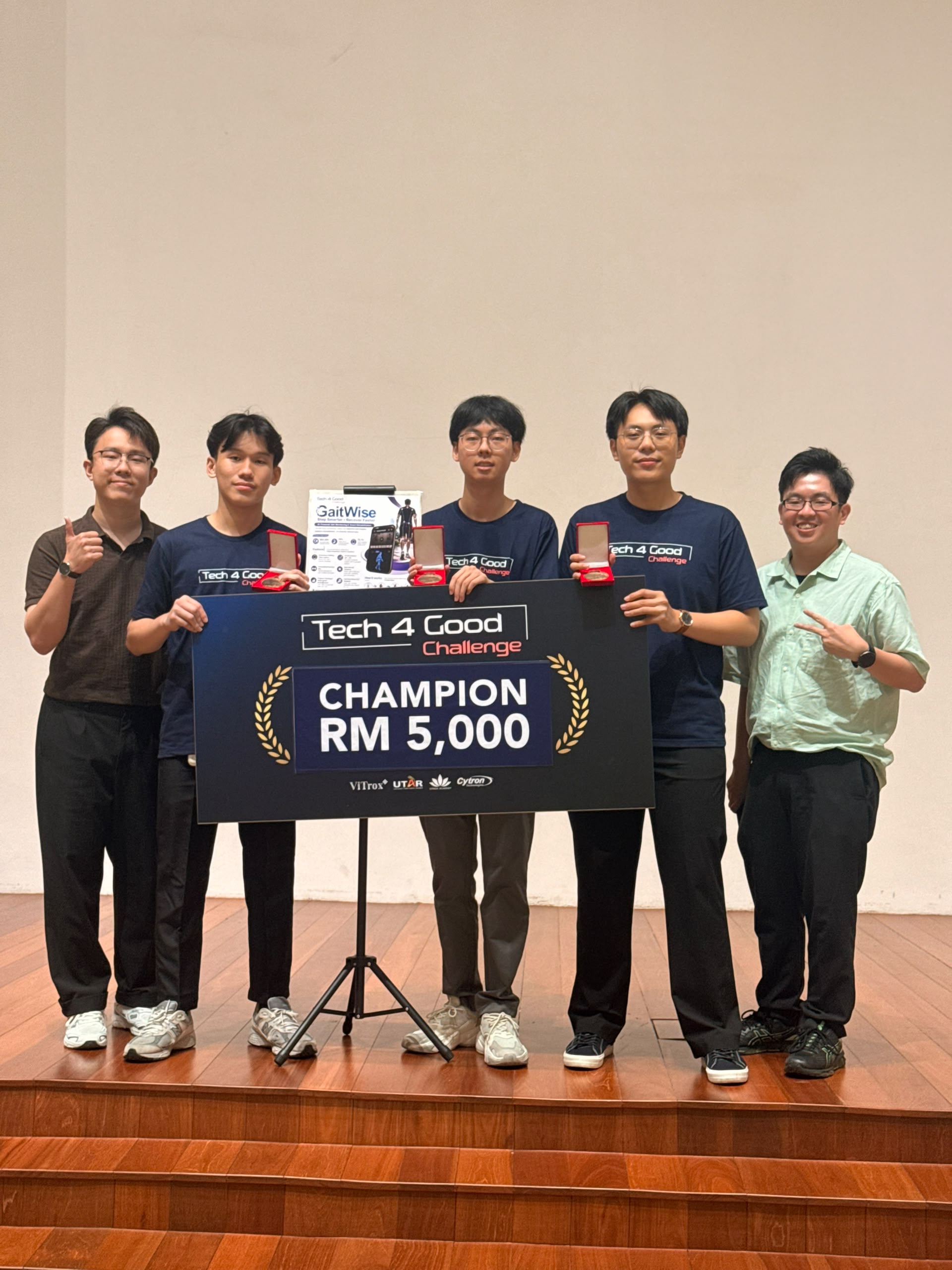
(From Left): Mr Tneh, Fang Sheng, Kah Xuan, Lee Yang, Ts Tan with their Champion win at the Tech 4 Good Challenge.
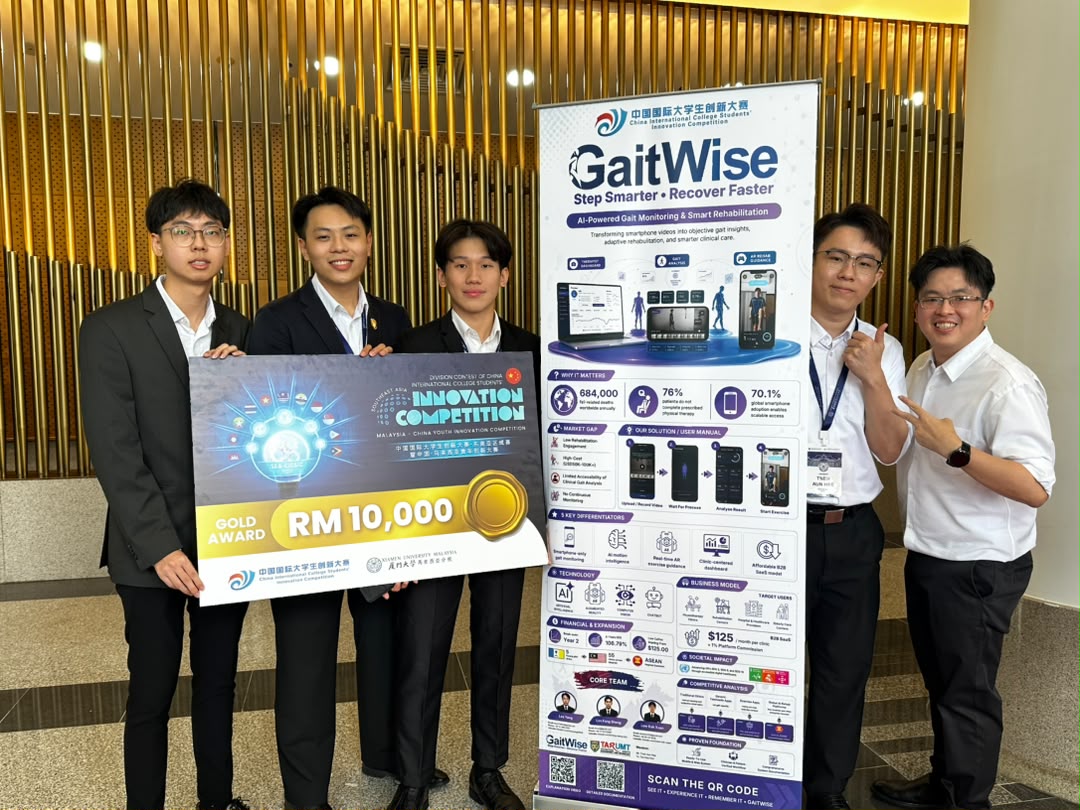
(From Left): Kah Xuan, Lee Yang, Fang Sheng, Mr Tneh, Ts Tan with their Gold Award win at the SEA-CICSIC 2026.
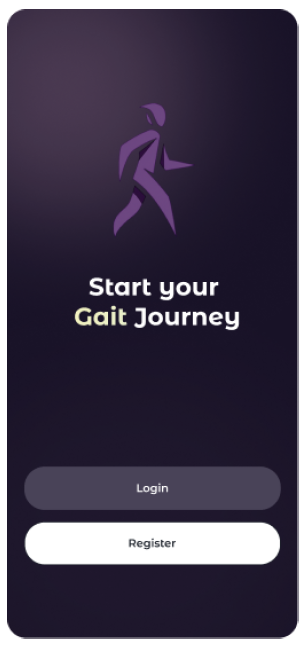
GaitWise App Mobile Interface – Starting Page.
What began with a basketball injury has evolved into an award-winning innovation with the potential to transform rehabilitation. For Bachelor of Software Engineering (Hons) students from TAR UMT Penang Branch, Lim Fang Sheng, Lee Yang and Low Kah Xuan, GaitWise: AI-Powered Gait Monitoring & Smart Rehabilitation is more than a technology project – it is a solution born from personal experience, refined through teamwork and driven by the desire to make rehabilitation more accessible. Their innovation recently earned them the Champion title in the Tech 4 Good Challenge held on 25 July 2026 and a Gold Award in the Southeast Asia Division Contest of the China International College Students’ Innovation Competition 2026 (SEA-CICSIC 2026) held on 19 – 21 June 2026.
The idea for GaitWise began with Fang Sheng’s own experience after he tore his anterior cruciate ligament (ACL) while playing basketball and underwent reconstructive surgery. During his recovery, he struggled to walk normally and could not tell whether his walking pattern had returned to normal.
“I kept asking my friends and family whether I was still walking differently,” he said. This made him wonder why people could track their steps, calories, heart rate and sleep on their phones, but not the way they walked. “That personal experience eventually became the starting point of GaitWise.”
GaitWise first started as Fang Sheng’s Final Year Project (FYP) before being further developed by the trio. The AI-powered solution uses smartphone video to analyse walking movements and provides information such as gait symmetry, cadence, joint movement and stability. It also provides personalised exercise guidance, real-time AR feedback and reassessment to help users track their rehabilitation progress.
Kah Xuan said the team worked together to improve the prototype by enhancing its software, simplifying the user experience and incorporating feedback from advisors, physiotherapists and trial users. “Working together allowed us to bridge hardware and software requirements, taking the prototype from a basic FYP project to a polished, commercial-ready innovation,” he said.
The team also received strong support from their mentors, Ts Tan Kee Oon, Programme Leader and Lecturer, as well as Mr Tneh Aun Hee, another Lecturer of the Department of Computing and Information Technology. Kah Xuan said the mentors guided them not only on the technical and healthcare aspects of the project, but also on how to present their innovation effectively. They conducted mock pitching sessions, prepared the students for challenging questions and helped them refine their value proposition.
Looking ahead, Lee Yang hopes to take GaitWise beyond competitions and into the wider community. “We hope to further enhance the application, collaborate with healthcare professionals for larger-scale validation, and eventually publish it for public use,” he said. The